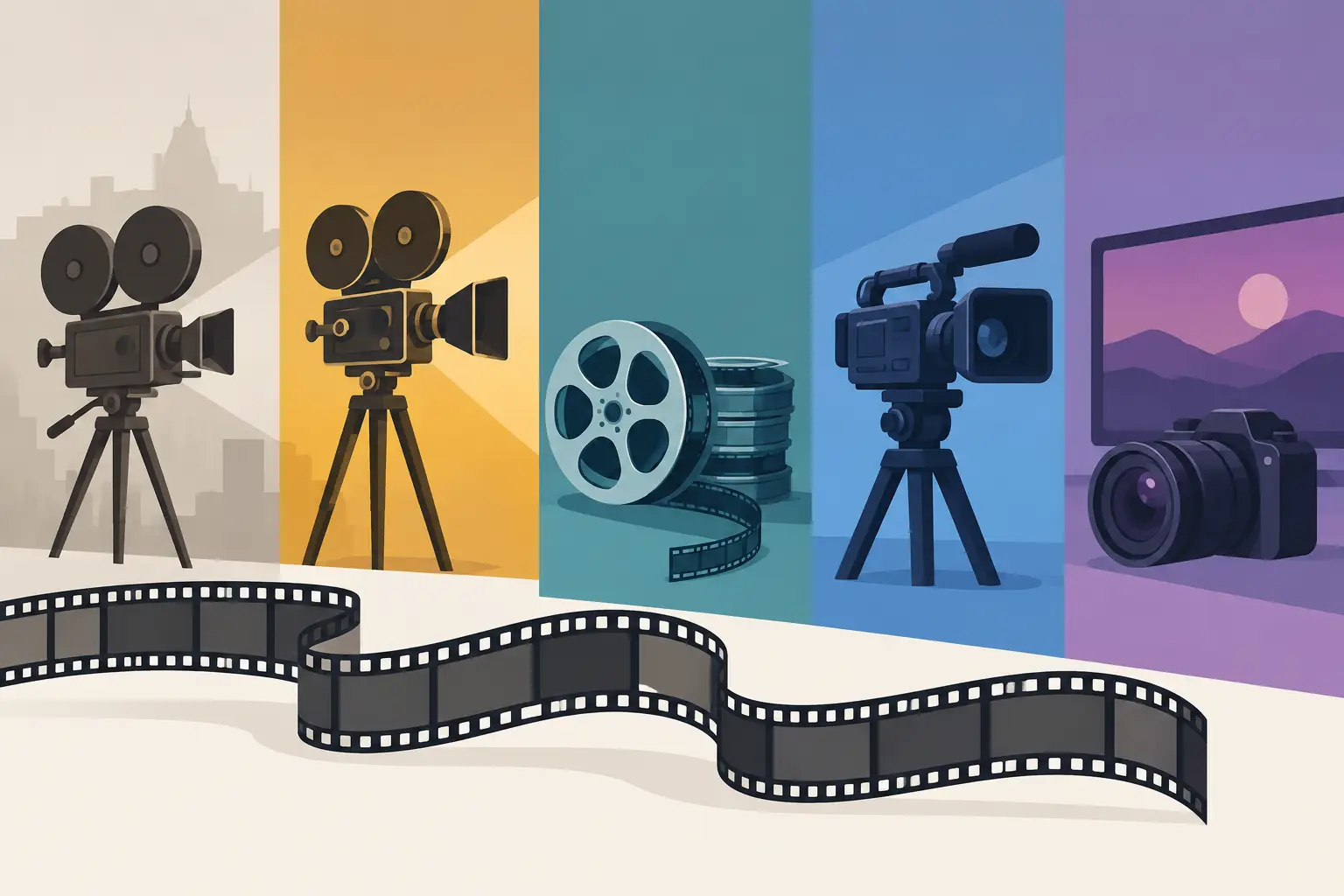
A movie can give away its era before anyone says a word. A cigarette haze, a too-perfect studio backdrop, a synth sting, or a handheld camera wobble can place you fast. Learning how to identify film eras is less about memorizing release dates and more about noticing the choices movies make when they are made.
That is useful for trivia, but it also makes watching more fun. Once you start catching the signals, every frame becomes a clue: the lenses, the hair, the pacing, even the way a character answers a phone.
Start With the Movie's Overall Feel
Before zooming in on costumes or props, take in the first 30 seconds. Does the film look polished and theatrical, gritty and observational, neon-lit and glossy, or digitally clean? The overall texture often narrows the field faster than one specific detail.
A classic Hollywood film from the 1930s or 1940s often feels controlled. Lighting is carefully shaped, sets can look immaculate, and dialogue lands with quick, practiced rhythm. By contrast, many films from the late 1960s and 1970s feel looser and more immediate. Cameras move through real locations, shadows are heavier, and scenes may leave more room for silence.
This is not a rulebook. Period movies deliberately copy older looks, and restorations can make a 1970s film appear much newer than it did in theaters. Treat the first impression as a hypothesis, then look for evidence.
How to Identify Film Eras Through Visual Clues
Visual style is usually your strongest shortcut. Directors and cinematographers have individual signatures, but they also work within the tools, budgets, fashions, and trends of their moment.
Black-and-white is only the first clue
Black-and-white points broadly toward early cinema, but it cannot identify an era by itself. Many films were still shot in black-and-white well after color became common, either for budget, style, or story reasons.
Look at contrast instead. Films from the 1940s and 1950s often use crisp, glamorous lighting or dramatic noir shadows. Earlier sound films can feel flatter, with performers lit clearly for the camera. A modern black-and-white movie may use sharper digital detail, more naturalistic lighting, or camera movement that would have been difficult decades ago.
Watch the camera, not just the picture quality
Camera movement is a great time marker. Older studio films often favor stable framing, smooth dollies, and deliberate composition. As cameras became lighter and filmmaking became more location-driven, handheld work and natural movement became more common.
The late 1960s and 1970s brought a rougher, more mobile energy to many American movies. Think zooms, long lenses, grain, and a camera that feels like it is following rather than staging the action. The 1980s often swings back toward bold visual control: crane shots, smoke, saturated lighting, and wide shots built to show off a big set piece.
By the 1990s and 2000s, editing speeds up in many mainstream genres. Music-video influence, fast cutting, and highly designed color palettes become easier to spot. In the 2010s, digital cameras bring clean low-light images and extremely controlled color grading, though plenty of filmmakers intentionally add grain or softer lenses.
Color tells a story about its decade
Color trends are not exact timestamps, but they are useful. Technicolor-era films often use rich reds, blues, and greens that feel heightened rather than natural. The 1970s frequently lean toward browns, mustard yellows, muted greens, and dim interiors. The 1980s love bold primary colors, shiny surfaces, and blue-and-orange contrasts.
The 1990s can look more neutral or cool, depending on genre, while many 2000s blockbusters push teal shadows and orange skin tones. Contemporary films may use restrained palettes, bright LED practicals, or highly selective color designed for streaming screens.
If a movie looks yellowed, do not immediately call it the 1970s. That could be a modern filter. Ask whether the production design, hair, dialogue, and technology agree with the color cue.
Costumes work best in combinations
A single denim jacket proves almost nothing. Fashion returns constantly. What matters is the full silhouette: cuts, fabrics, hairstyles, makeup, shoes, and how ordinary people are dressed in the background.
Shoulder pads, big hair, and loud accessories can signal the 1980s. Baggy jeans, flannel, and relaxed layers suggest the 1990s. Early 2000s looks often feature low-rise silhouettes, tiny sunglasses, frosted makeup, and conspicuous logos. But a movie set in another decade will borrow all of these on purpose.
The trick is to separate the film's setting from the film's production era. A movie set in 1955 but made in 1985 may get the cars and skirts right while revealing its real age through editing, soundtrack choices, and glossy lighting.
Listen for the Era
Sound can solve a close call. Early sound movies may have dialogue that feels stagey and music that arrives in obvious bursts. Mid-century studio films often use full orchestral scores with clear themes and transitions. By the 1970s, pop songs, ambient sound, and less polished dialogue mixes become more common.
Synths are an obvious 1980s clue, but be careful: synth scores have returned in a big way. What matters is how the sound is used. An original 1980s action movie might layer electronic stings over broad, punchy effects. A modern retro film may use the same ingredients with cleaner mixing, deeper bass, and more contemporary editing.
Dialogue also dates a film. Listen for slang, speech rhythm, and what characters assume needs explaining. Older films may avoid explicit language because of censorship standards. In a 1990s movie, characters might debate a landline message or a video store rental. In a 2000s movie, flip phones and dial-up references do quiet timestamp work.
Storytelling Trends Can Narrow It Down
Film eras have storytelling habits. They are not laws, but they can be revealing when paired with visual clues.
Classic studio-era movies generally move with strong cause and effect. Scenes explain what is happening, heroes are clearly framed, and endings often resolve the major conflict. New Hollywood films of the late 1960s and 1970s are more willing to end ambiguously, center antiheroes, or let a scene drift into discomfort.
The 1980s made room for high-concept premises that can be pitched in one sentence: a time-traveling teen, a cop in a skyscraper, a kid who discovers an alien. The 1990s often play with irony, crime structures, independent-film realism, and self-aware dialogue. The 2000s expand franchise logic, fantasy worlds, and digital spectacle. Recent movies may reflect streaming-era habits, including faster hooks, chapter-like structure, and stories built around recognizable intellectual property.
Genre changes the equation. Horror, for example, regularly revives older techniques. A slasher may look deliberately grainy, and a science-fiction movie may use retro-futurist production design. Never date a film from one trope alone.
Check the Technology in the Frame
Phones, televisions, cars, computers, and media formats are powerful clues because they change fast. A rotary phone points earlier than a cordless phone. A bulky CRT television suggests the late 20th century. A flip phone usually places a story around the late 1990s through 2000s, while early smartphones narrow it further.
Still, identify what the object means in context. A character using a cassette tape could be in 1987, or they could be in a 2020s nostalgia film. Look for several technologies at once. A cassette, a wood-paneled station wagon, and a mall food court tell a stronger story than a cassette alone.
Even credits can help. Opening title sequences, studio logos, aspect ratios, and end-credit songs all carry era-specific habits. These are the details that can turn a lucky guess into a confident answer.
Build Your Guess From Three Clues
For a fast movie puzzle, do not try to catalog everything onscreen. Pick three signals from different categories: one visual clue, one cultural or technological clue, and one storytelling or sound clue.
For example, grainy photography and zooms suggest a 1970s influence. Add muted earth-tone costumes and a paranoid, unresolved thriller plot, and the case gets much stronger. Or take a bright neon palette, practical creature effects, and a synth-heavy score. That combination points hard toward the 1980s, even before you recognize an actor.
This approach also protects you from traps. A modern film can imitate one old feature. It is much harder to imitate every tiny behavior of an era without making its influences visible somewhere else.
The next time a movie frame lands in a PlotLuck puzzle, pause before chasing actor names. Read the room first: the light, the lens, the clothes, the sound, the tech. Film eras are hiding in plain sight, and noticing them makes every guess feel a little less like luck.