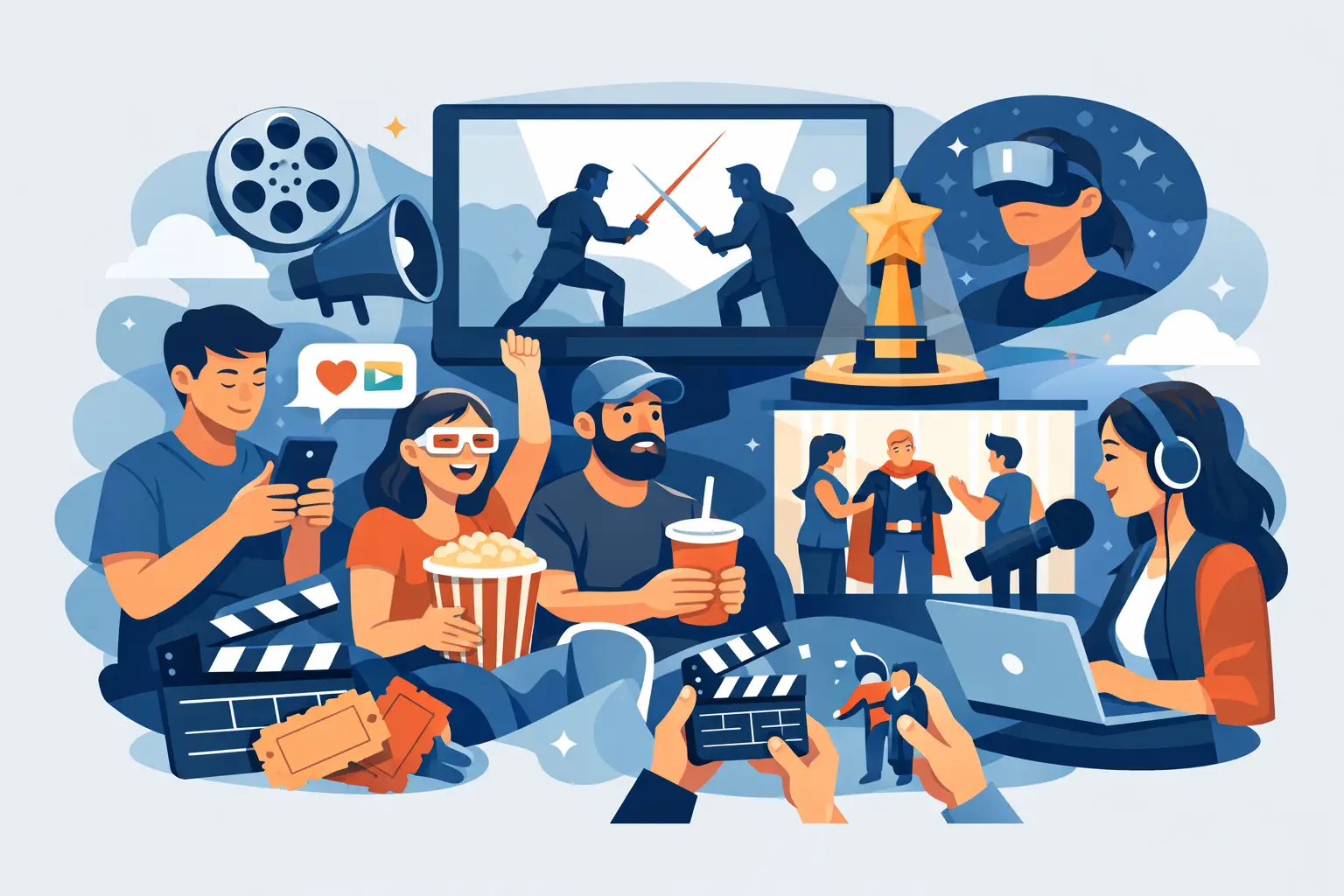
Most movie marketing fades fast. A trailer drops, a few clips hit social, opening weekend happens, and the conversation moves on. The best movie fan engagement examples do something different: they give people a reason to come back, participate, and show off what they know.
That matters because movie fans are not passive audiences anymore. They rank scenes, argue endings, collect trivia, remix memes, and turn tiny details into full conversations. If you want attention from this crowd, you need more than awareness. You need a repeatable interaction that feels fun, recognizable, and worth sharing.
Why movie fan engagement examples matter now
Film fandom used to center on release windows. Now it lives everywhere - streaming menus, short-form video, group chats, Reddit threads, and browser tabs people open every morning. Attention is fragmented, but enthusiasm is not. That creates a clear challenge: how do you turn movie interest into a habit instead of a one-time spike?
The strongest movie fan engagement examples work because they fit how people already behave. They are quick to join, easy to understand, and specific enough to make fans feel seen. Broad entertainment campaigns can reach more people, but niche movie experiences often create deeper loyalty because they reward actual film knowledge.
There is a trade-off here. The more niche the format, the smaller the potential audience. But the upside is better retention, stronger identity, and more natural word of mouth. For movie brands, studios, publishers, and fan-first products, that is often a better deal than chasing the widest possible net.
8 movie fan engagement examples that actually keep attention
1. Daily movie puzzles
A daily puzzle is one of the cleanest engagement loops in entertainment. It gives fans a small challenge, a clear finish line, and a reason to return tomorrow. For movie fans, this works especially well because film knowledge is naturally layered. One player might recognize a director from a single frame. Another might solve through cast clues or genre logic.
What makes this format strong is repeat behavior. Instead of asking fans for a big commitment, it asks for two or three minutes. That is much easier to build into a routine. It also creates a subtle social effect: people like comparing scores, streaks, and solve times without needing a huge production around it.
This is where a focused product like PlotLuck fits naturally. A daily movie-first puzzle gives fans a low-friction way to test what they know and come back for more without needing a full game session.
2. Quote and scene guessing games
Movie quotes are internet currency. The right line can trigger nostalgia, reveal taste, or start an argument instantly. That makes quote-based games a reliable engagement format, especially for social content or short interactive rounds.
The best versions are not just easy recall tests. They use difficulty curves. Start with iconic lines, then move into deeper cuts, alternate takes, or context-based clues. Scene guessing works the same way. A cropped image, a prop, or a color palette can be enough for fans who really know their movies.
The risk is that this format can get repetitive if it leans too hard on the same blockbusters. Variety matters. Mixing cult classics, recent streaming hits, and award-season titles keeps the game from feeling stale.
3. Bracket-style fan voting
People love ranking movies almost as much as they love watching them. Brackets turn that impulse into a simple game. Best horror sequel, most rewatchable rom-com, greatest movie car chase - give fans a theme and they will do the rest.
This works because voting feels personal but lightweight. You do not need expert knowledge to participate, and you do not need to write a full review. Just pick one and move on. Yet that simple action often sparks debate in comments, screenshots, and friend groups.
Brackets are strongest when the prompt is specific. "Best movie ever" is too broad and leads nowhere interesting. "Best final act in a 2000s thriller" is narrower, more opinionated, and far more likely to attract real fans.
4. Live watchalongs and second-screen prompts
Watchalongs can still work, but only if they offer something beyond "press play now." Fans already watch together informally through texts and social apps. A real engagement layer needs prompts, timed trivia, polls, or challenges that make the experience feel active.
Second-screen formats are especially useful for movies with memorable twists, quotable moments, or strong fandom lore. You can ask prediction questions before a reveal, run live polls during major scenes, or reward viewers for spotting recurring details.
The trade-off is timing. Live formats create urgency, but they also exclude people who cannot join at that exact moment. If you use this approach, it helps to package the best moments into replayable content later.
5. Character alignment and personality quizzes
Quizzes remain one of the easiest ways to pull movie fans in because they turn fandom into identity. People want to know which heist crew member they are, what slasher movie survivor role they would play, or which courtroom drama matches their vibe.
This format works best when it is playful but not lazy. Fans can tell when a quiz is just a generic template wearing movie-themed clothes. Good quizzes reflect actual genre logic, tone, or character traits. The result should feel specific enough that someone wants to share it.
There is a ceiling, though. Personality quizzes are great for discovery and social spread, but weaker for long-term retention unless they connect to an ongoing system like daily challenges, collectible results, or changing themes.
6. Fan theory prompts and prediction games
Some movies invite analysis more than others. Franchises, mysteries, horror films, and endings with room for interpretation all create fertile ground for fan theory engagement. Instead of just posting a theory and hoping people respond, smart brands turn the theory itself into a prompt.
Ask fans to choose the most believable ending interpretation. Let them vote on what a clue really meant. Run a prediction game before a sequel or trailer reveal. This transforms passive reading into participation.
What makes this effective is that it respects the audience. Movie fans like being treated as observant, not just reactive. But moderation matters. Theory-driven content can get messy if it rewards conspiracy-level overreach or spoiler-heavy posting without clear boundaries.
7. User-generated lists and mini reviews
Not every fan wants to create full essays or video breakdowns. Many are happy to contribute if the format is shorter. Top-five lists, one-line reviews, hot takes under a character limit, or "recommend a movie for this mood" prompts all lower the barrier.
This kind of participation works because it gives fans authorship without demanding too much time. It also creates a content engine. One good prompt can generate dozens of responses, each with its own personality and discoverability.
The trick is curation. If every opinion is treated the same, the feed becomes noise. Highlighting sharp, funny, or unexpectedly insightful responses makes the community feel more alive and gives people a reason to contribute better answers.
8. In-person and hybrid fan events
Physical movie trivia nights, pop-up screenings, themed bars, and festival side events still matter because they create memory, not just clicks. They give fandom a social body. Even small events can work if the concept is clear and the audience feels like they belong there.
Hybrid versions often perform even better. A live trivia night with online scoreboards, digital bonus rounds, or follow-up daily challenges can extend one event into a longer habit. That is where a lot of movie engagement efforts fall short - they treat the event as the finish line instead of the start of a relationship.
The downside is obvious: events take more effort and budget than a simple digital prompt. But when done well, they create stronger loyalty than most one-off social campaigns ever will.
What the best movie fan engagement examples have in common
Across all these formats, a few patterns keep showing up. First, they are easy to enter. Fans should understand the premise in seconds. Second, they reward specificity. Movie people enjoy feeling like their knowledge actually matters. Third, they create a loop. Not just "that was fun," but "I want to do that again tomorrow" or "I need to send this to someone."
They also avoid a common mistake: trying to entertain everyone in the same way. A casual fan and a deep-cut cinephile do not need identical experiences. Sometimes a lighter format brings people in, while a harder challenge keeps the core audience invested. The balance depends on the goal. Reach and retention are not always built by the exact same mechanic.
Choosing the right movie fan engagement example
If the goal is daily return traffic, puzzles and recurring challenges make more sense than one-time quizzes. If the goal is social spread, ranking formats and personality results usually travel better. If the goal is deeper community, user prompts and live participation tend to outperform polished but passive content.
That is the real takeaway from these movie fan engagement examples: the winning idea is rarely the loudest one. It is the one that fits the behavior you want. A small, repeatable interaction can beat a flashy campaign if it becomes part of someone’s routine.
Movie fans already want to play with what they watch. The smart move is to give them a format that respects their time, rewards their taste, and makes coming back feel obvious.